On February 10, 2026 — Little New Year on the Chinese calendar — Game Science dropped a six-minute "in-engine" video with zero warning. No countdown timer, no cryptic teaser image, not even a vague "stay tuned" tweet. The footage just appeared on Bilibili and Weibo unannounced. Two hours later, it had blown past two million views and claimed the top spot on Weibo trending.
That is how "Black Myth: Zhong Kui" said happy new year to the world.
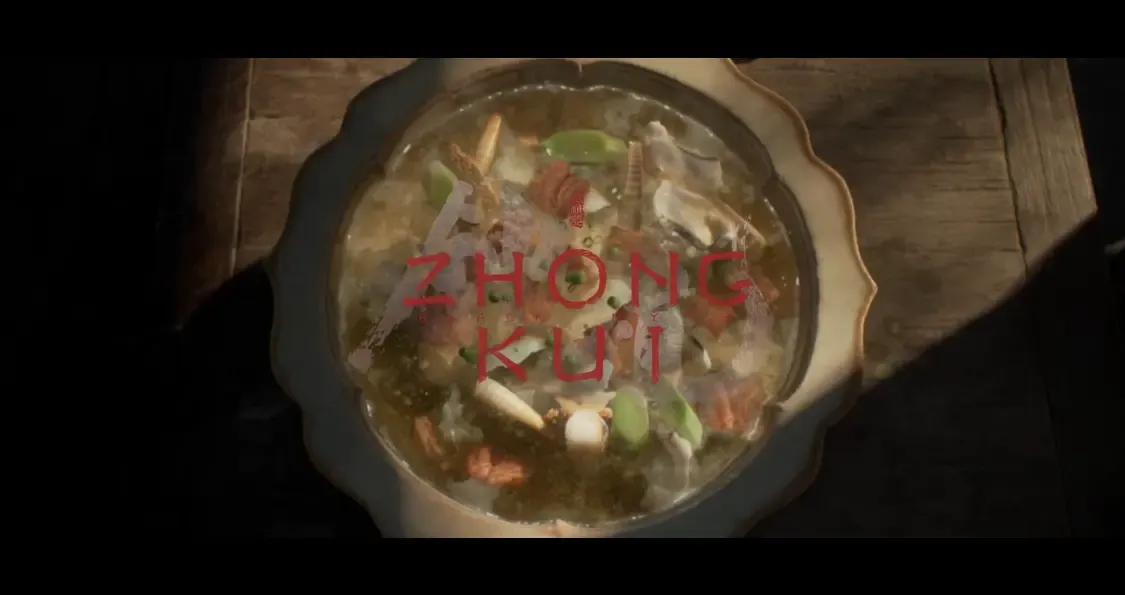
A Kitchen, a Cook, and Ingredients That Should Not Exist
The premise sounds almost mundane: a woman cooks a meal in a kitchen. No haunted temple, no dark dungeon. Just a stove, a cleaver, a wok, and a fish getting gutted. The cooking sequence — scaling, chopping, stir-frying, seasoning, plating — flows with the kind of casual competence you expect from a cooking channel, not from the studio behind one of the most anticipated action games on the planet.
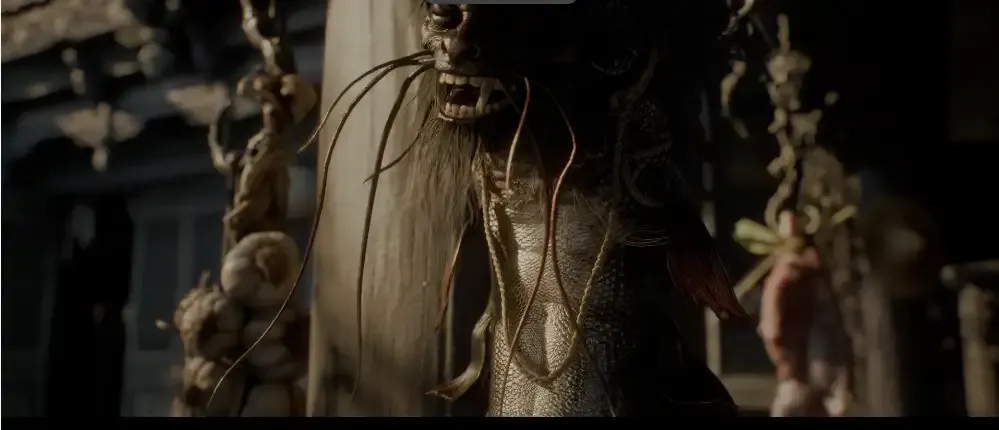
Ingredient 1: Chiru, a human-headed fish monster from Shanhaijing?
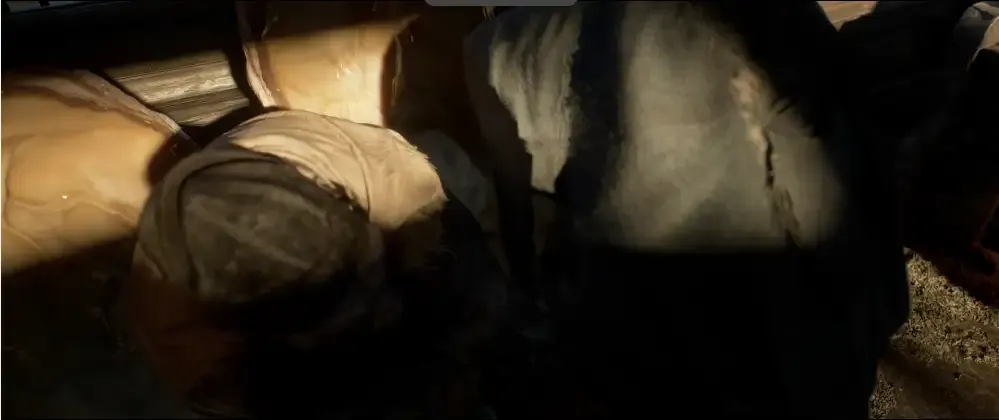
Ingredient 2: Clam Spirit (Bangjing) from ancient folklore?
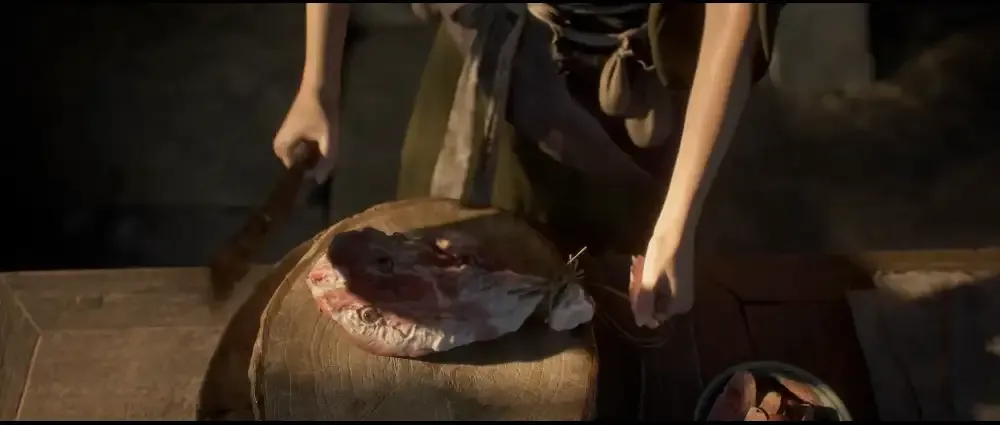
Ingredient 3: Shirou, a regenerating meat-like entity from Shanhaijing?
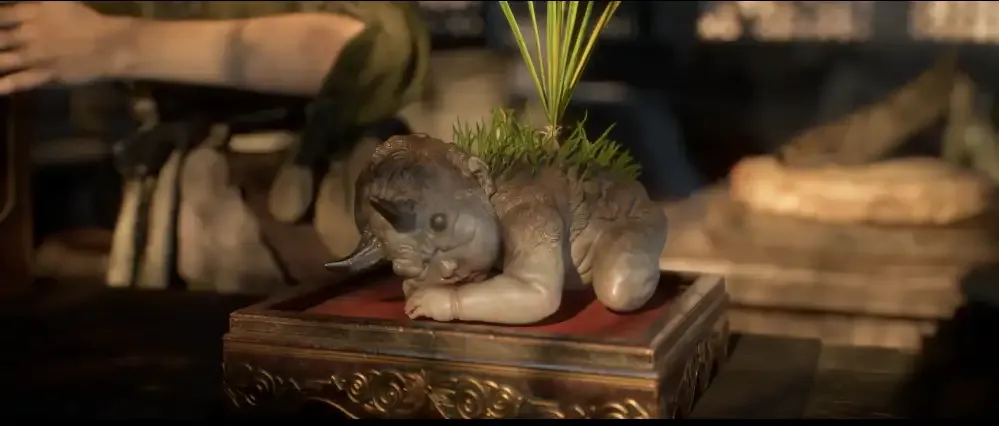
Ingredient 4: Ghost Grass, a plant-like entity said to be a ghost's infant?
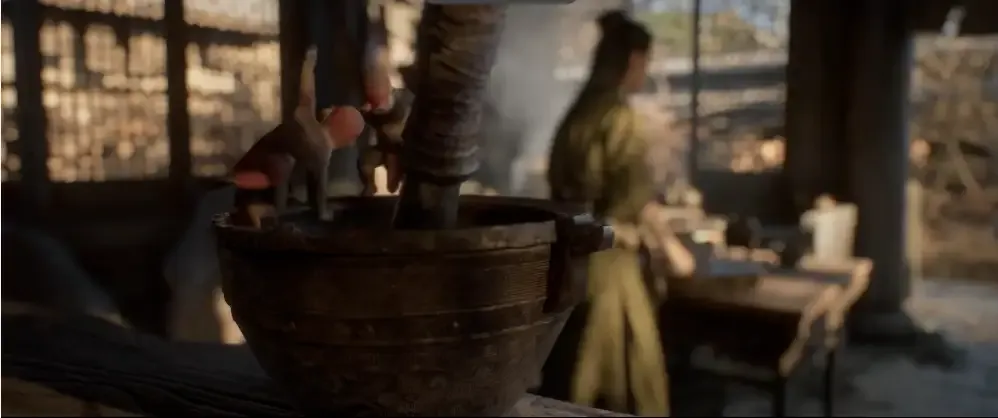
Tiny monsters jumping into the mortar?
Then the wrongness creeps in. That fish has eyes that no fish should have. The spice jars hold powders with no earthly color. The oil smoke rising from the wok refracts light in ways that have nothing to do with any real kitchen. The cook seems entirely unfazed, working through the prep with the relaxed efficiency of someone for whom monster butchery is just another Tuesday.
The dish gets plated. She carries it to a table where someone sits waiting — or rather, something. A figure with a cloth bag pulled over its head. You cannot see the face underneath, but the silhouette suggests contours that do not belong on a human skull. The hooded figure accepts the bowl and chopsticks and begins to eat.
Cut to black.
Feng Ji: Please Do Not Over-Analyze This
Within an hour, Game Science founder Feng Ji posted a Weibo message that boiled down to one thing: this is not a gameplay demo or promotional video. It is a New Year greeting short with no connection to the actual story. Please do not over-interpret it.
Telling a player base that has already spun up a hundred lore theories to stop speculating is roughly equivalent to telling a cat to ignore a cardboard box — it only guarantees the cat launches itself at the box with more enthusiasm. Feng Ji surely knows this. The second half of his message carried an implicit wink: the technology is real, the visuals are real, and as for the story — your guesses are probably wrong, or maybe right, but he is not confirming either way.
Art director Yang Qi followed up with a shorter, arguably more provocative post built around five Chinese characters: "为何烹鬼不吃鬼" — "why cook ghosts but not eat ghosts." Those words confirm that the ingredients are genuinely supernatural. They also imply a hierarchy within the game's zhiguai worldview: demons and monsters can be cooked, but ghosts follow a different set of rules.
Four Technical Pillars in a Single Shot
Chinese players distilled the short film's achievements into a neat formula: "Lighting, animation, materials, facial expression — four top-tier achievements in one continuous shot."
Lighting. The kitchen's global illumination is striking. Firelight dances across walls in real time. Steam from the wok catches the light to form soft volumetric god rays. Water droplets flung during fish-cutting refract pinpoint highlights. This is dynamic global illumination, almost certainly a further refinement of the Lumen pipeline Game Science has been pushing since Wukong on Unreal Engine 5.
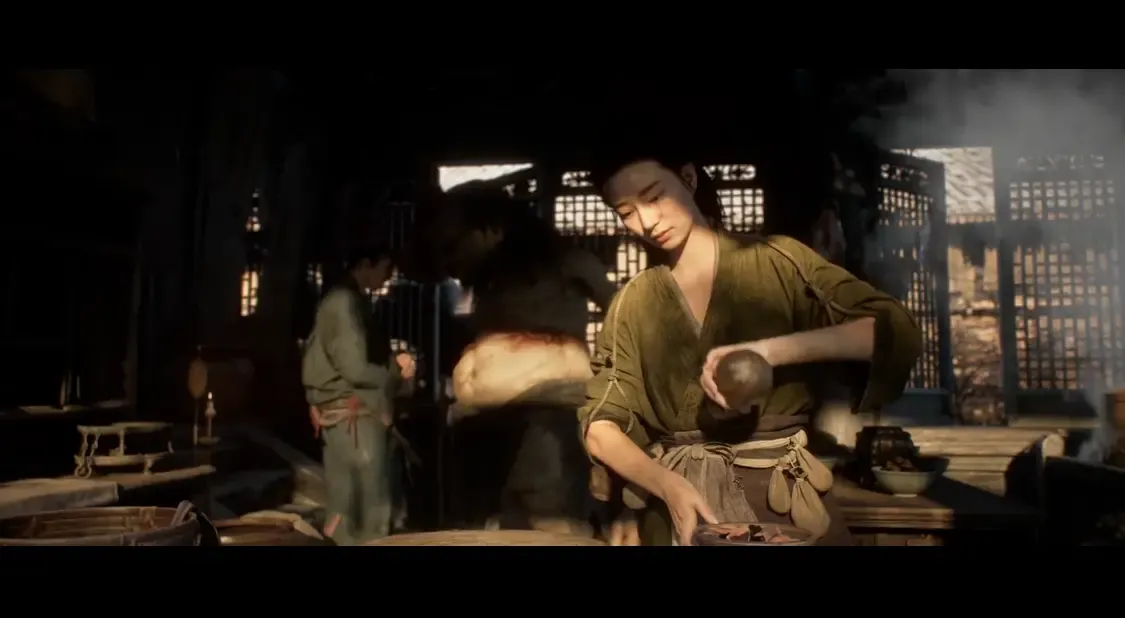
Animation. Every motion holds up under frame-by-frame scrutiny. The angle and force of the cleaver, the subtle wrist flick when scraping scales, the forearm engagement during the wok toss. This is high-fidelity motion capture with meticulous post-cleanup — not hand-keyframed animation.
Materials. The most easily overlooked yet technically demanding aspect. The cross-section texture of sliced fish. The color of exposed marrow when bone gets chopped. Vegetables transitioning from rigid to wilted the moment they hit oil. This fidelity pushes past what anyone traditionally expects from game graphics.
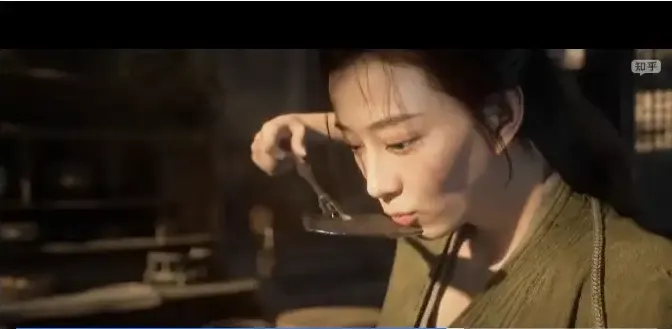
Facial expression. The cook's micro-expressions are extraordinarily rich: a slight frown when the knife hits the gill, her mouth turning up involuntarily when she catches the aroma, the split-second eye shift when she sets the plate before the hooded figure. If this is real-time — and Game Science says it is — the studio has hit a new benchmark in facial rigging and expression-driven animation.
The Cultural Roots of Cooking Monsters
Using supernatural creatures as cooking ingredients has deep roots in Chinese weird fiction. Pu Songling's Liaozhai Zhiyi repeatedly plays with inversions of eating and being eaten. Those beautiful women near the dinner table are often the predators. The line between human and demon was never drawn at "does it eat people" — it was drawn at "does it follow the rules."
Journey to the West pushes the concept further. Sun Wukong hunted demons for sport. Most creatures on the pilgrimage end up beaten, captured, or consumed. Zhu Bajie — the Marshal Tianpeng reincarnated as a pig — nearly became braised pork at Gao Village.
Go back further and you hit pre-Qin sacrificial culture: offering live animals to spirits, then the community eating the remains together — absorbing supernatural power into human social order through communal eating. Game Science's monster-cooking sequence is a gamified translation of that old cultural logic.
Yang Qi's remark about "cooking ghosts but not eating ghosts" implies an internal legal code: demons can be cooked, monsters can be boiled, but ghosts require different processing. Zhong Kui is the Divine Demon Hunter — ghosts get suppressed or exorcised, not plated. This rule suggests the world-building has genuine internal consistency.
Who Is the Cook? Who Is the Hooded Figure?
Two characters were never going to escape the community magnifying glass.
The cook appears ordinary, but her comfort in a supernatural kitchen marks her as something beyond human. Some speculate she is an NPC running a "monster diner." Others suggest she handles logistics for Zhong Kui's team. Her unflappable calm reads like professional routine, not supernatural power.
The hooded figure is the video's suspense engine. A cloth bag over the head carries multiple associations in Chinese folk culture: an executed prisoner, a detained ghost, a spirit that cannot show its face. If the kitchen sits inside a ghost-processing bureau, this could be a detained entity undergoing "processing." Being fed might be interrogation, punishment, or something older — a transaction between living and dead that predates written history.
All of this may have nothing to do with the final game, exactly as Feng Ji insisted. But even as a standalone vignette, the imagery reveals something about the world being built: not a simple humans-versus-ghosts setup, but an ecosystem with its own rules, domestic routines, and lunch breaks.
What the Short Tells Us Without Telling Us Anything
From a marketing angle, the video is surgically precise. Zero plot points revealed. No core mechanics disclosed. No release date. Yet it demonstrates that the studio's tech has taken another leap, establishes a distinctive tone separating Zhong Kui from Wukong's aesthetic, and threads an emotional needle by choosing "cooking" and "New Year's dinner" as its central motif during the one holiday where those images resonate hardest.
Six minutes. One kitchen. A supernatural New Year's feast. Game Science took the most ordinary domestic scene imaginable and loaded it with the most extraordinary rendering tech available, then left behind the year's most tantalizing unanswered questions. As for whether players listened to Feng Ji's plea to stop over-analyzing — what do you think?