The Demon Bestiary
Allies and adversaries from Zhong Kui's demon-hunting journey — a comprehensive encyclopedia of Chinese mythological creatures.
Ancient Spirits
In the dawn of Chinese mythology, supernatural forces walked the earth as deities, divine beasts, and trickster spirits. They are not "ghosts" — they are older, far older. Some became Zhong Kui's allies, others the very first prey in his demon-slaying career.
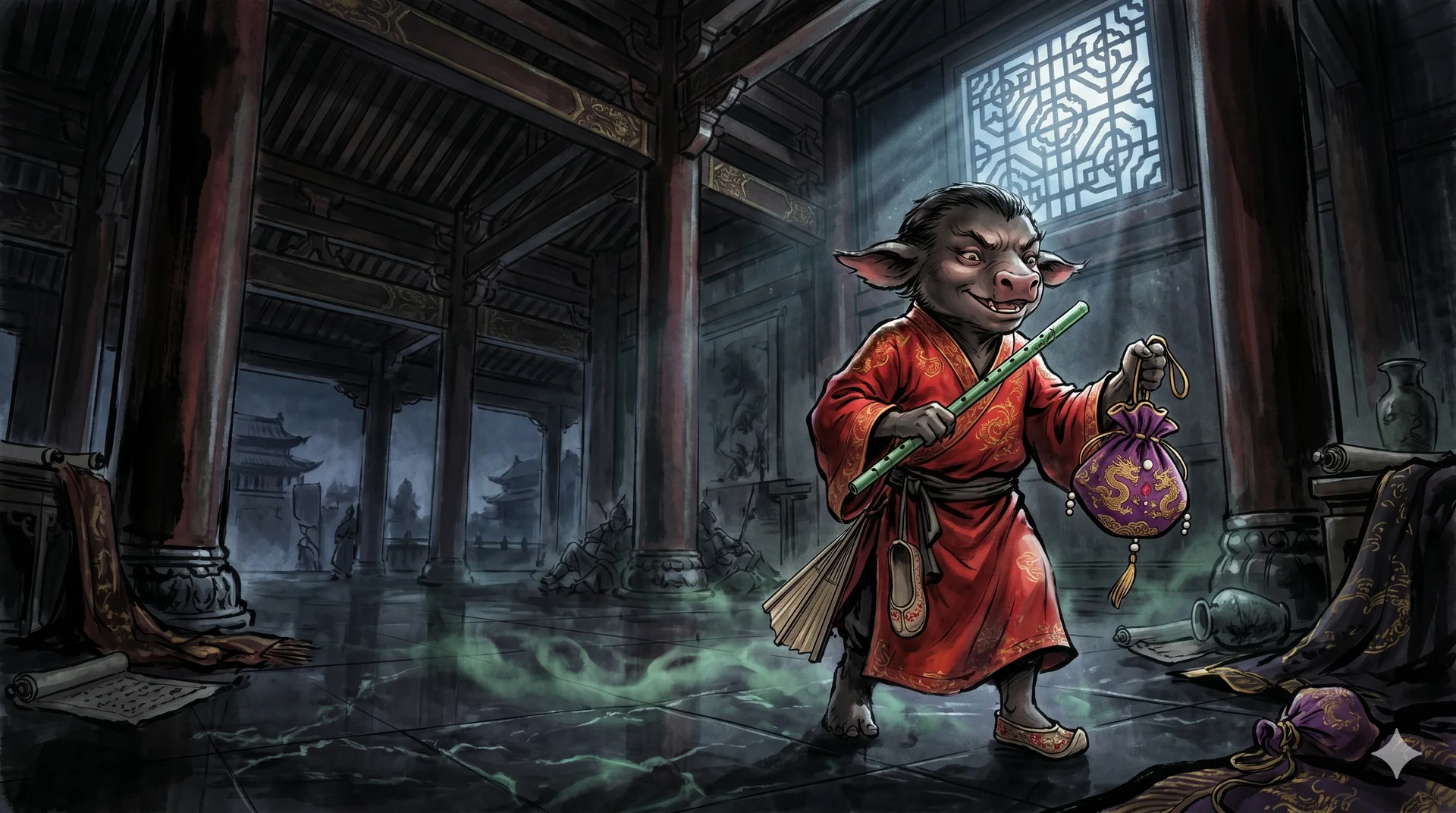
Xuhao: The Trickster Ghost Who Ignited Zhong Kui's Demon-Slaying Legend
Xuhao is the notorious thief ghost from Tang Dynasty legend who stole from Emperor Xuanzong in a dream—and became Zhong Kui's first kill. Discover the origin story of China's most famous demon hunter and the ghost of emptiness and ruin.
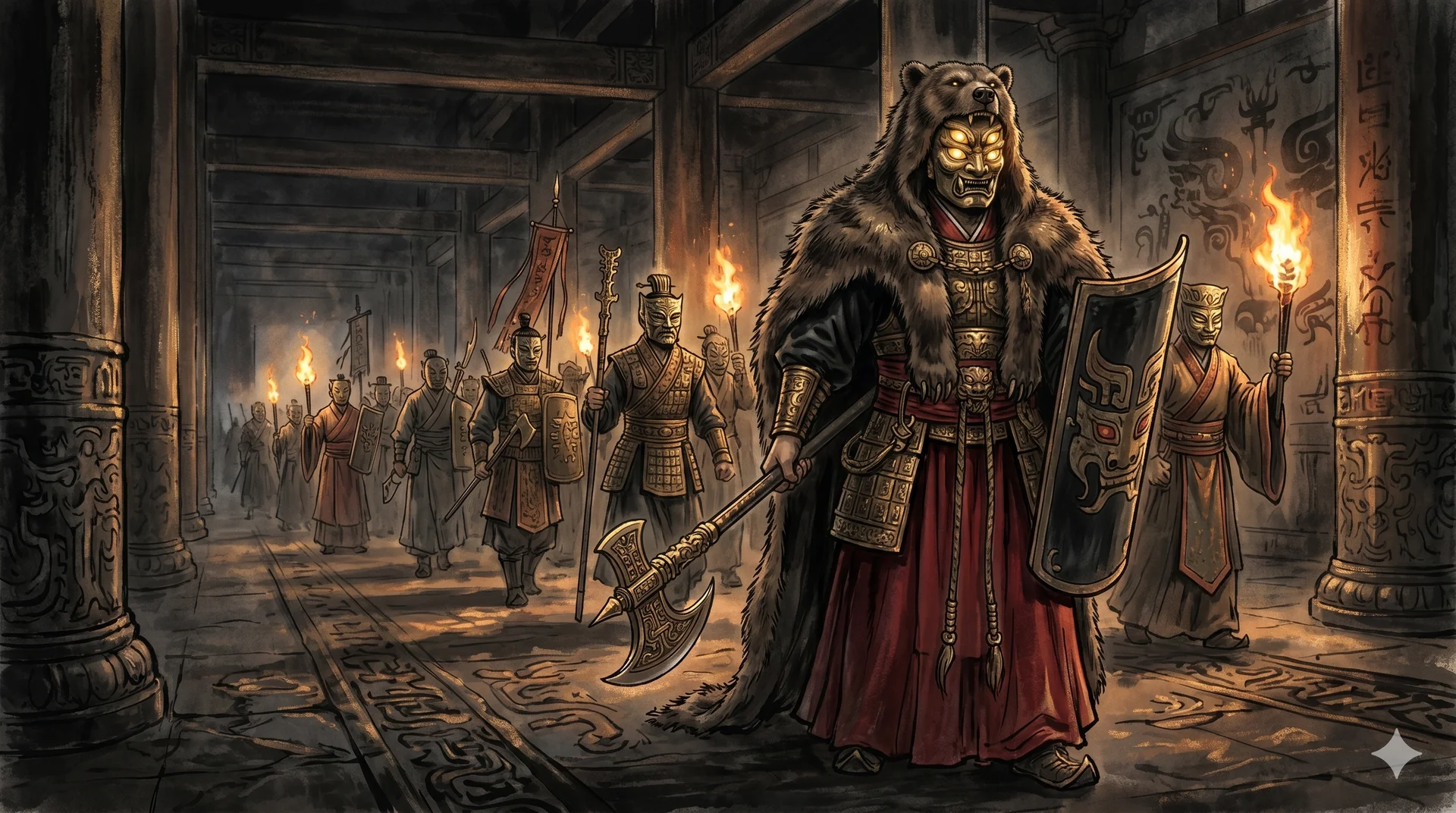
Fangxiangshi: The Bear-Skinned, Four-Eyed Exorcist Who Paved the Way for Zhong Kui
Fangxiangshi was ancient China's earliest state-appointed exorcist, leading the imperial Nuo ritual for over a thousand years. Clad in bearskin with four golden eyes, this fearsome demon hunter directly influenced the legend of Zhong Kui — and scholars consider Zhong Kui to be Fangxiangshi's spiritual successor in the Tang Dynasty.
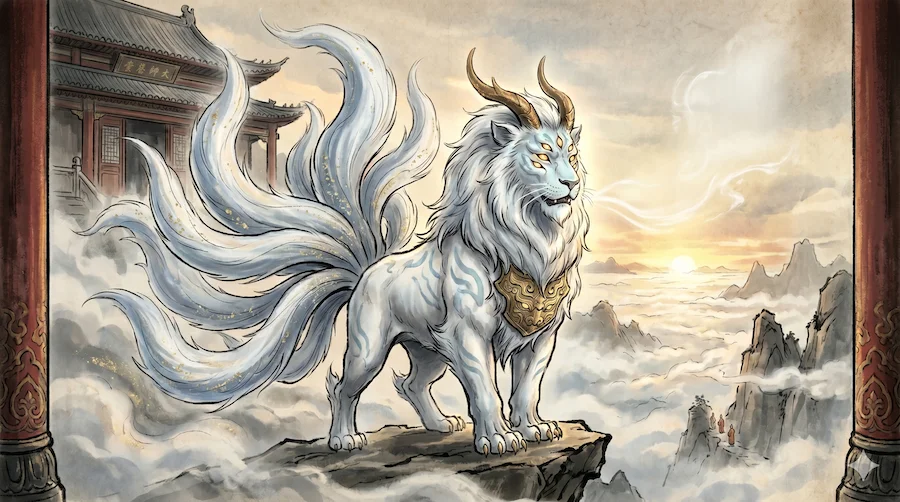
Baize: The All-Knowing Divine Beast and Zhong Kui's Loyal Steed in Demon-Slaying Lore
Baize is ancient China's most intellectually formidable mythical creature — a divine beast that could speak human languages and knew the names, forms, and weaknesses of all 11,520 types of demons and spirits. First encountered by the Yellow Emperor on the shores of the Eastern Sea, Baize gave rise to China's earliest demon encyclopedia. In Liu Zhang's Qing-dynasty novel 'Zhong Kui Slaying Demons,' it became the legendary demon hunter's faithful mount. Discover the full story of this knowledge-wielding guardian from mythological origins to literary fame.
Underworld & Heaven
Judgment below, plague above. The Ten Kings of Hell govern the afterlife's bureaucratic machinery, while the Five Plague Gods embody humanity's oldest fear — epidemic disease. They are not demons Zhong Kui slays, but the power structure that defines his mission: the Hell Kings appointed him Demon Queller; the Plague Gods are the cosmic adversaries his talismans ward against.
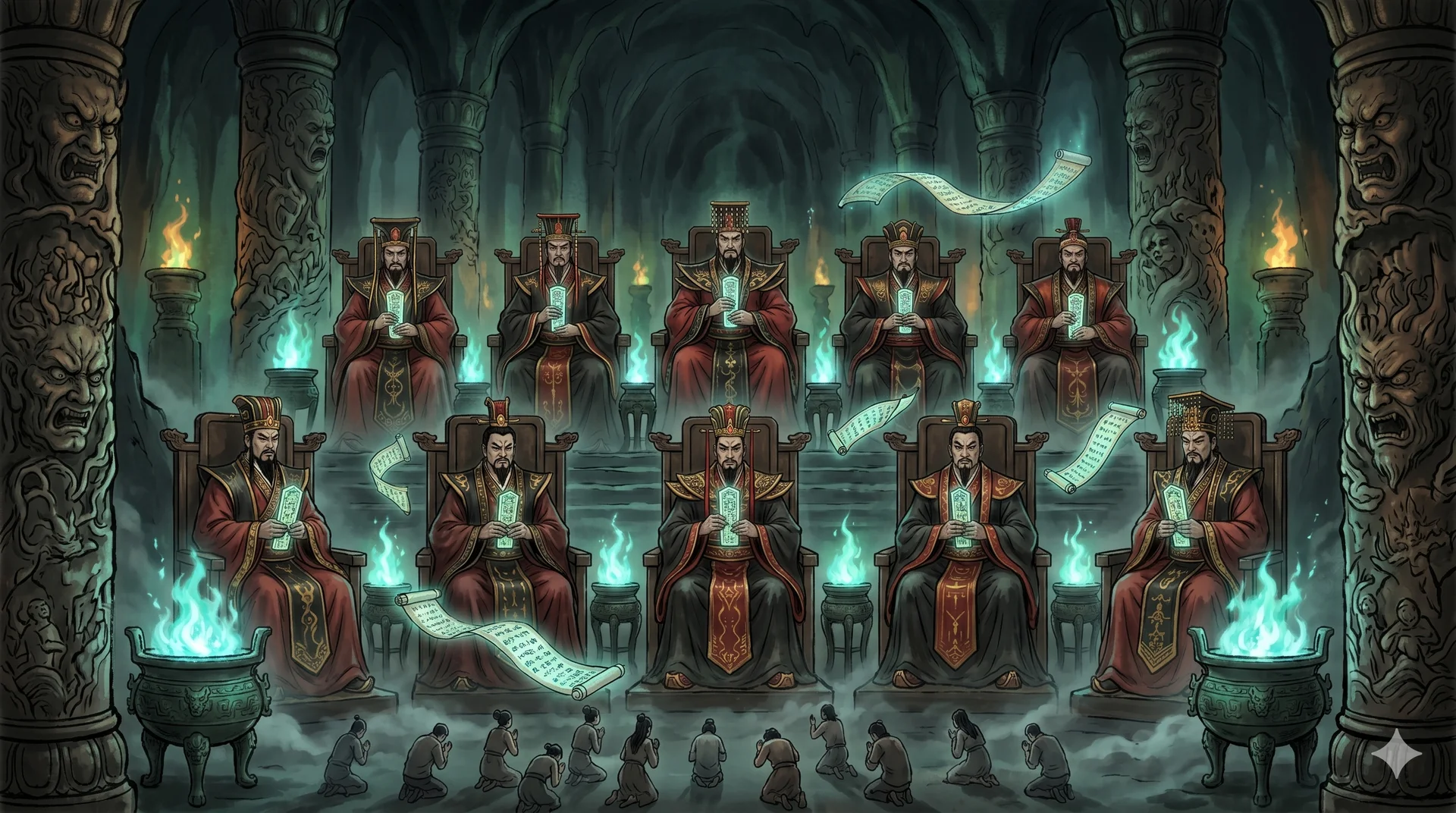
The Ten Courts of Yama: China's Underworld Justice System and Zhong Kui's Divine Authority
The Ten Kings of Hell form the backbone of Chinese afterlife mythology—a structured judicial system where every soul faces judgment across ten courts. Discover how these underworld rulers appointed Zhong Kui as the Demon Queller and shaped China's most enduring vision of cosmic justice.
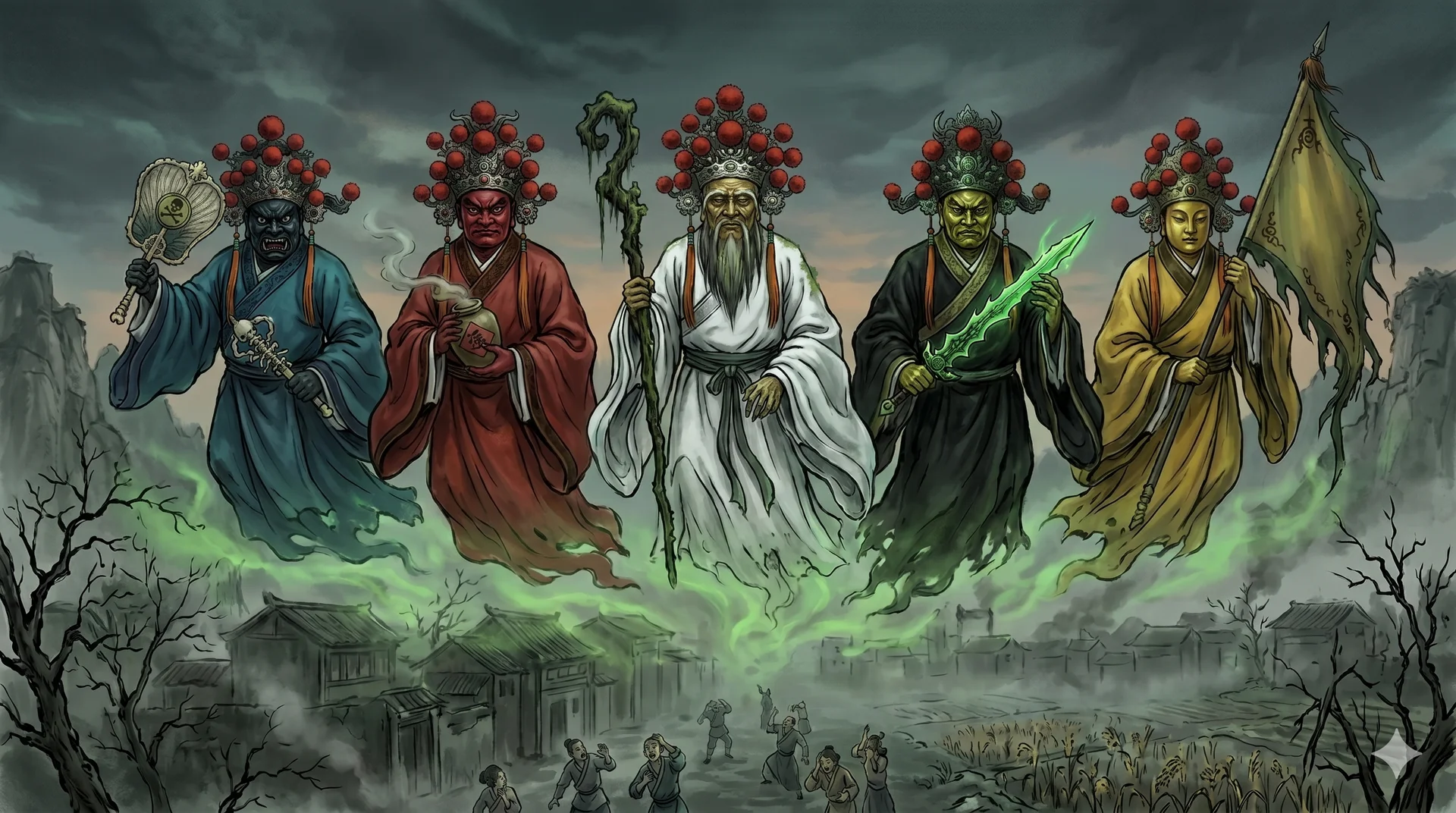
The Five Plague Gods: Seasonal Spirits of Pestilence in Chinese Demonology and Their Rivalry With Zhong Kui
Discover the Five Plague Gods of Chinese folk religion — Zhang Yuanbo, Liu Yuanda, Zhao Gongming, Zhong Shigui, and Shi Wenye — five supernatural beings tied to the five elements, five directions, and the cycles of seasonal disease. Learn how Zhong Kui, the Demon Queller, confronts these unstoppable forces and why hanging his image has been China's most enduring anti-plague tradition for over a thousand years.
Ghosts of Human Nature
Born from Qing dynasty novelist Liu Zhang's "Chronicle of Demon Slaying" — not a ghost story, but a satirical allegory. The Rumor Ghost embodies disinformation, the Shameless Ghost personifies audacity, the Lust Ghost represents desire... Ten ghosts, ten human frailties. Zhong Kui does not hunt monsters — he hunts the darkness within.
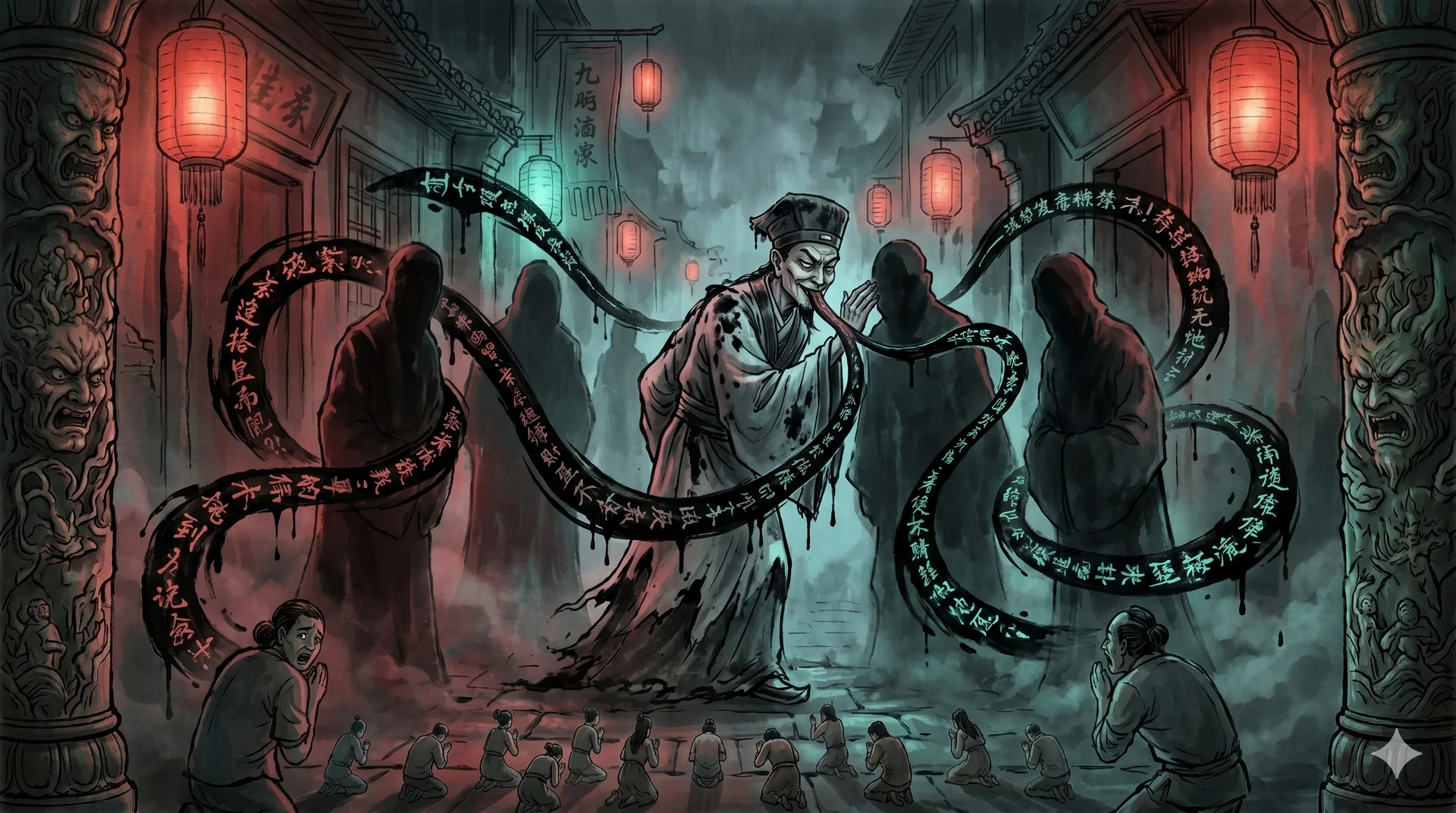
Zhou Gui: The Demon of Rumors and Deception in Zhong Kui's Legend
Zhou Gui is the first 'human-natured demon' confronted by Zhong Kui in the Qing dynasty satire Zhan Gui Zhuan. Born from the human weakness of spreading lies, it embodies the corrosive power of gossip, slander, and manipulative deceit.
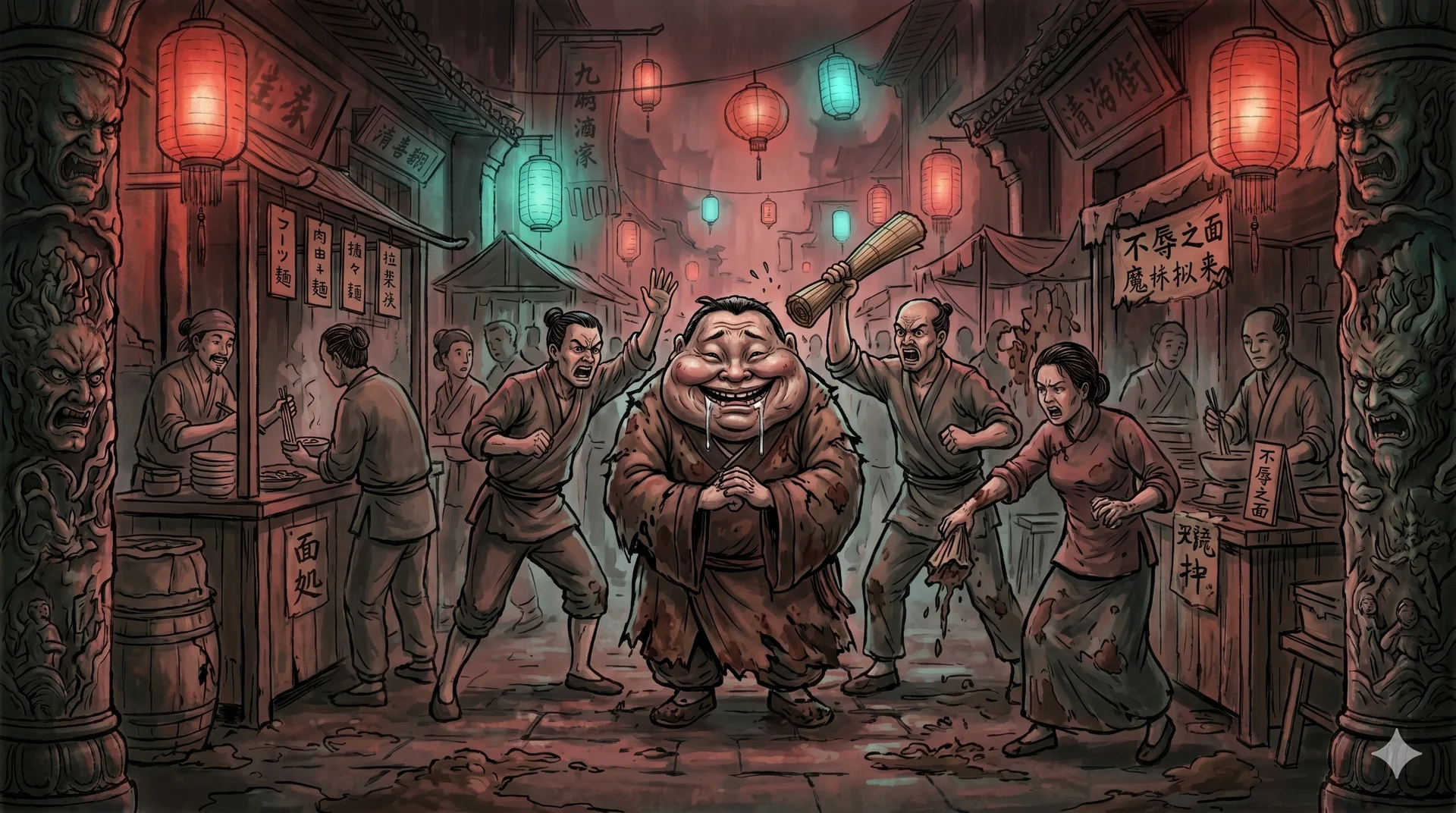
Xianlian Gui: The Shameless Demon of Chinese Mythology and Zhong Kui's Arrow of Justice
Discover the Xianlian Gui, the brazen-faced demon from the Qing Dynasty ghost-hunting classic 'Quelling the Demons.' Explore how this thick-skinned specter embodies shamelessness, why Zhong Kui's arrow pierced its impervious face, and what this supernatural tale reveals about morality in Chinese culture.
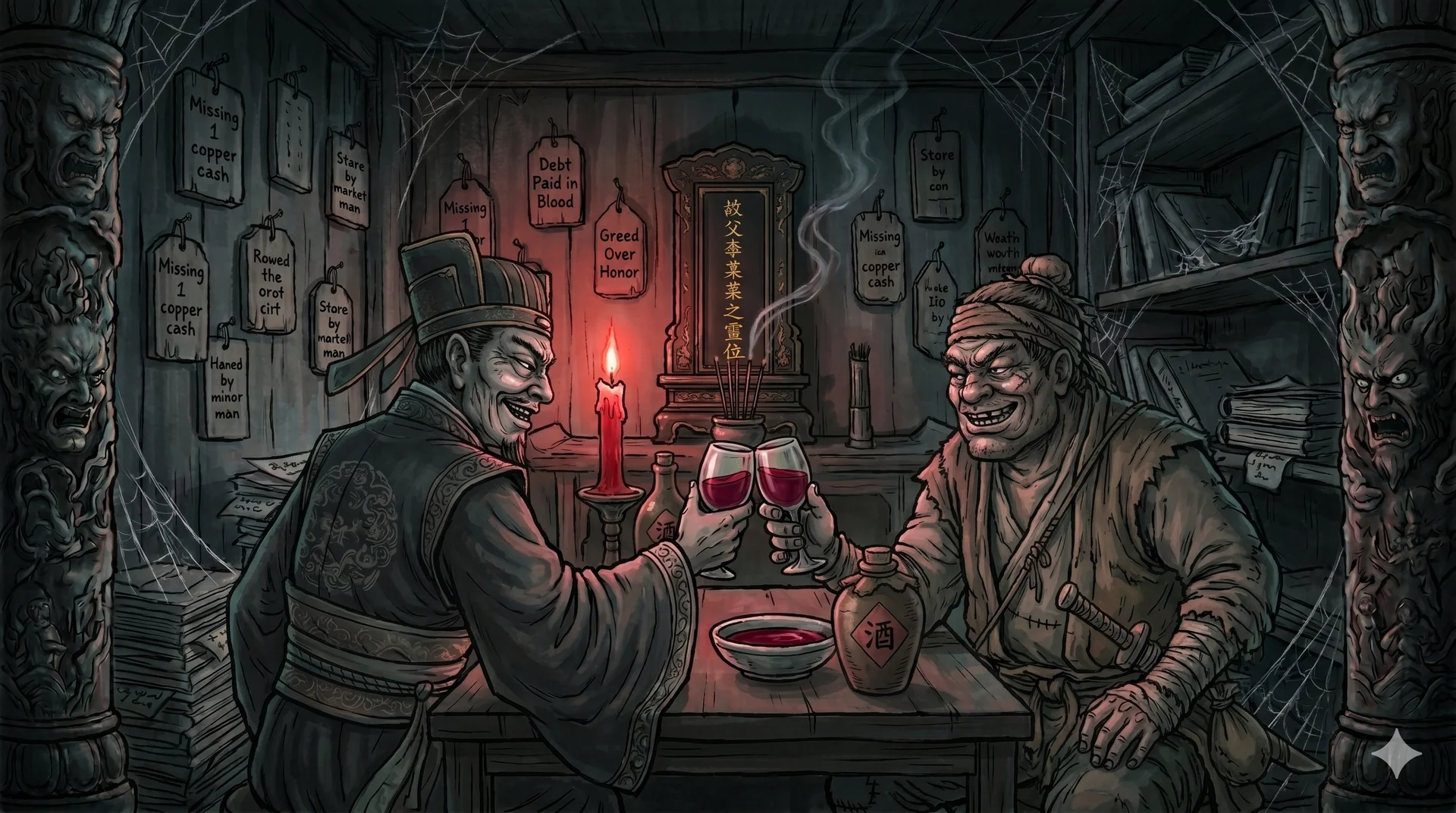
Wocuo Gui: The Petty Demon of Grudges and Small-Mindedness in Chinese Mythology
Wocuo Gui is a minor but philosophically significant demon from Liu Zhang's Chronicle of Demon Slaying. Embodying pettiness, score-keeping, and small-mindedness, this spirit reveals how everyday moral failings can be as destructive as grand evils.
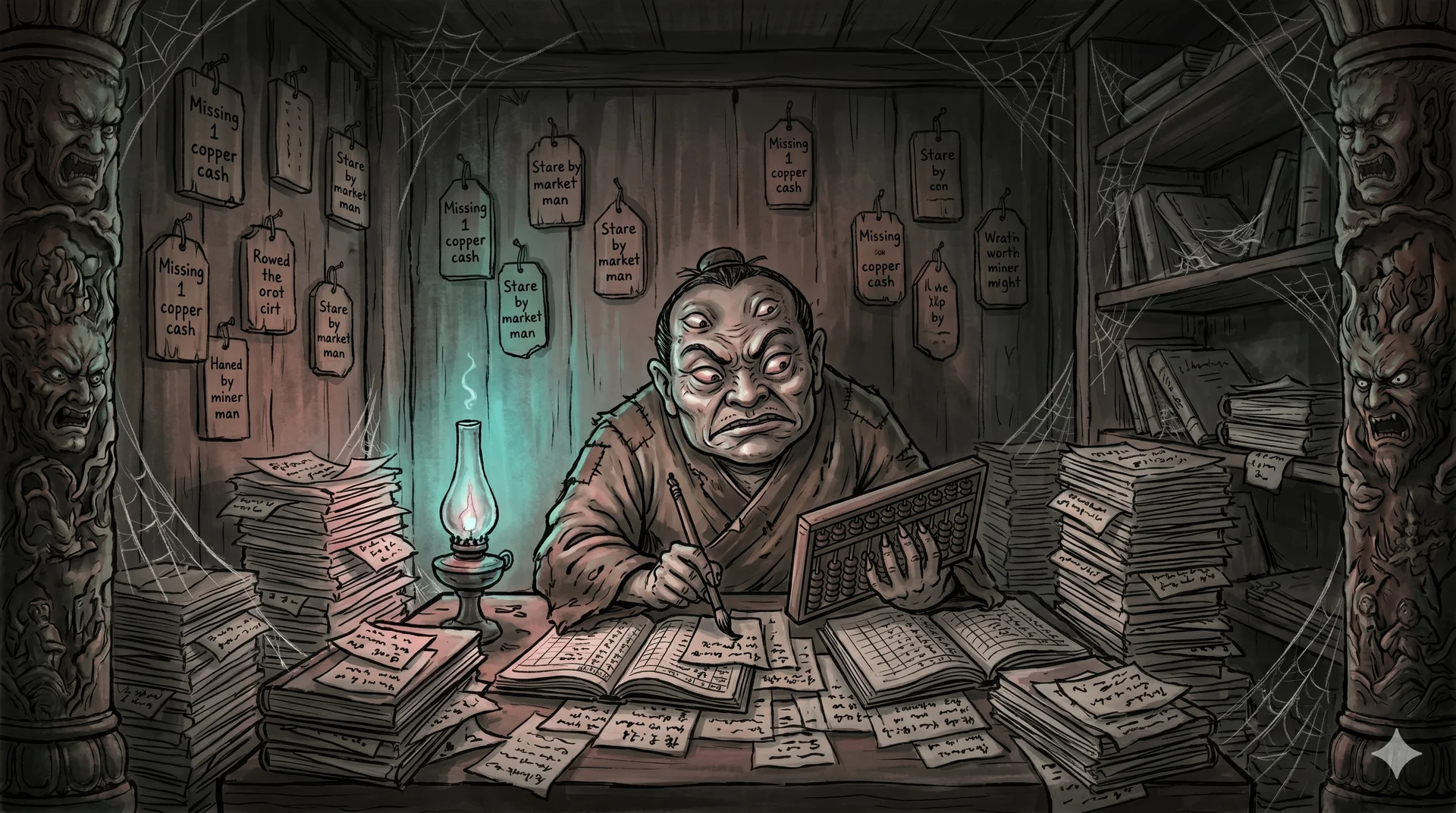
Wang'en Gui: The Ungrateful Demon of Chinese Mythology and Zhong Kui's Crusade Against Betrayal
Explore the Wang'en Gui, the Ungrateful Demon from the Qing Dynasty ghost-hunting classic 'Quelling the Demons.' Discover how this specter of forgotten debts and betrayed loyalties embodies the darkest violation of Confucian ethics — and why Zhong Kui's sword shows it no mercy.
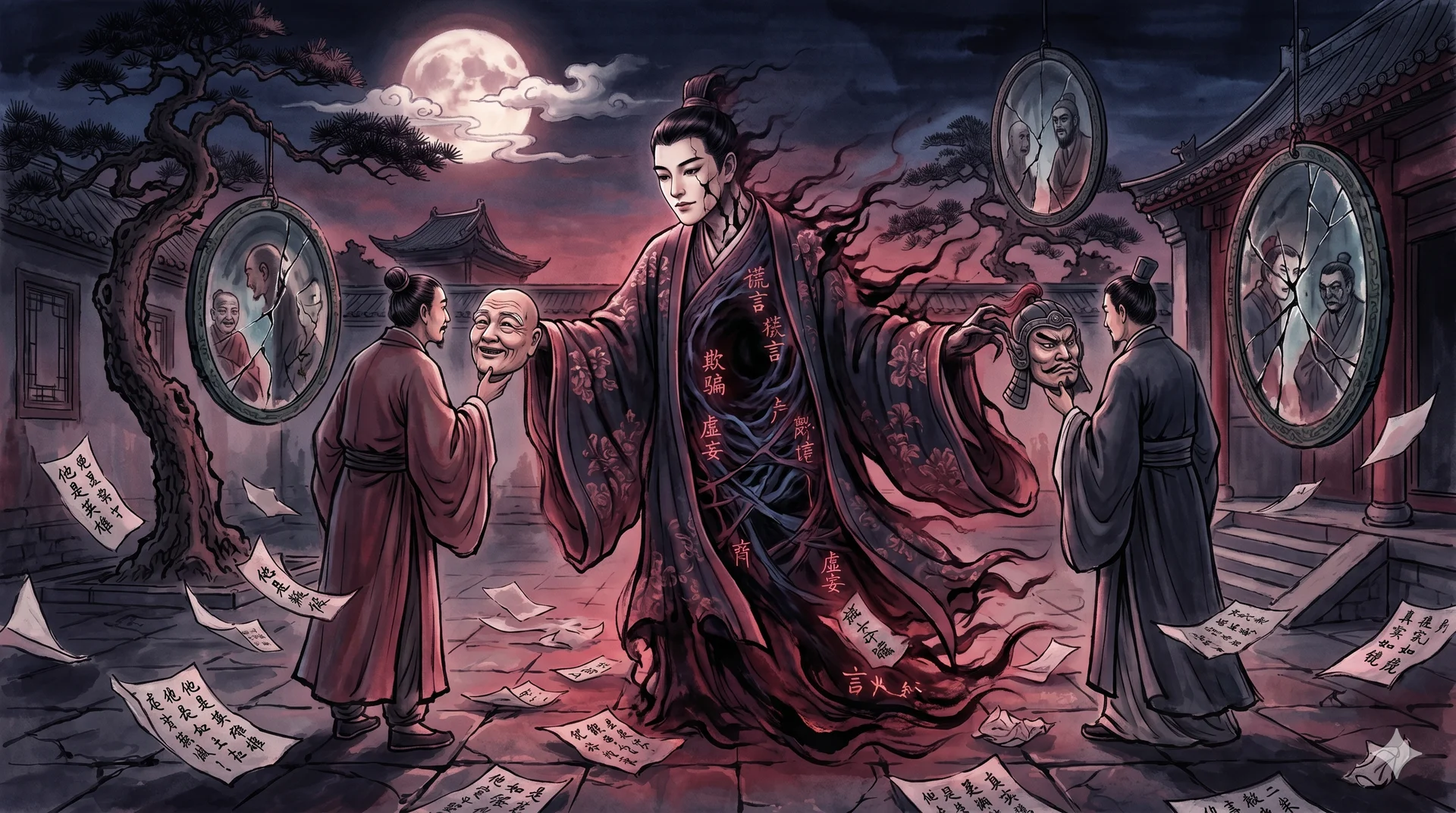
Huang Gui: The Lying Demon of Quelling the Demons and the Self-Destructive Power of Deceit
Explore the Huang Gui, the Lying Demon from Chapter Six of the Qing Dynasty ghost-hunting novel 'Quelling the Demons.' Discover how this deceiver specter embodies falsehood and self-deception, and why its downfall reveals the karmic logic of Chinese supernatural storytelling.
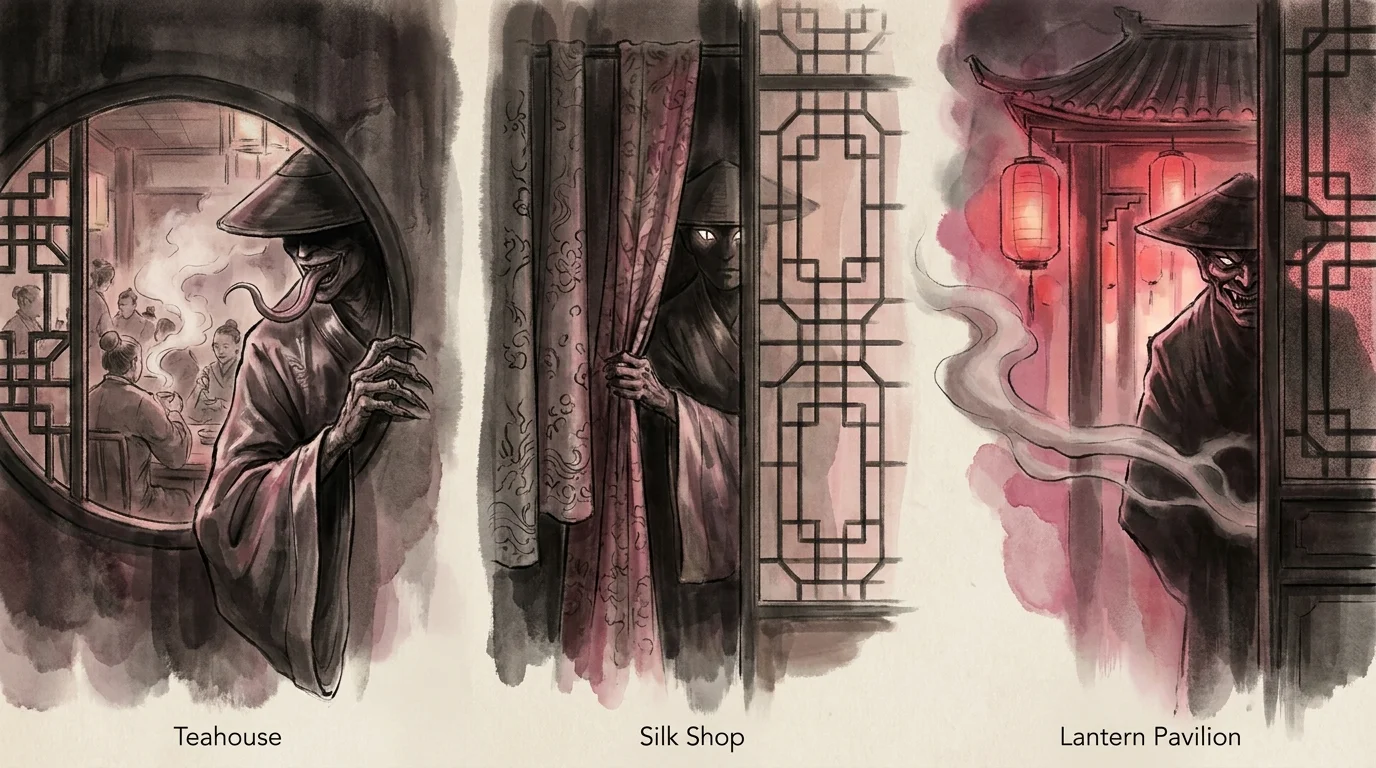
Se Gui: The Demon of Lust and Hidden Desire in Zhong Kui's Ghost Slaying Tales
Se Gui, the Demon of Lust, appears in Chapter 9 of Liu Zhang's 'Tales of Ghost Slaying' — a masterful portrayal of carnal desire as the most elusive and universal human weakness. Explore how this shapeshifting spirit slips between three locations, embodying the stealth, mobility, and self-deception of those consumed by lust.
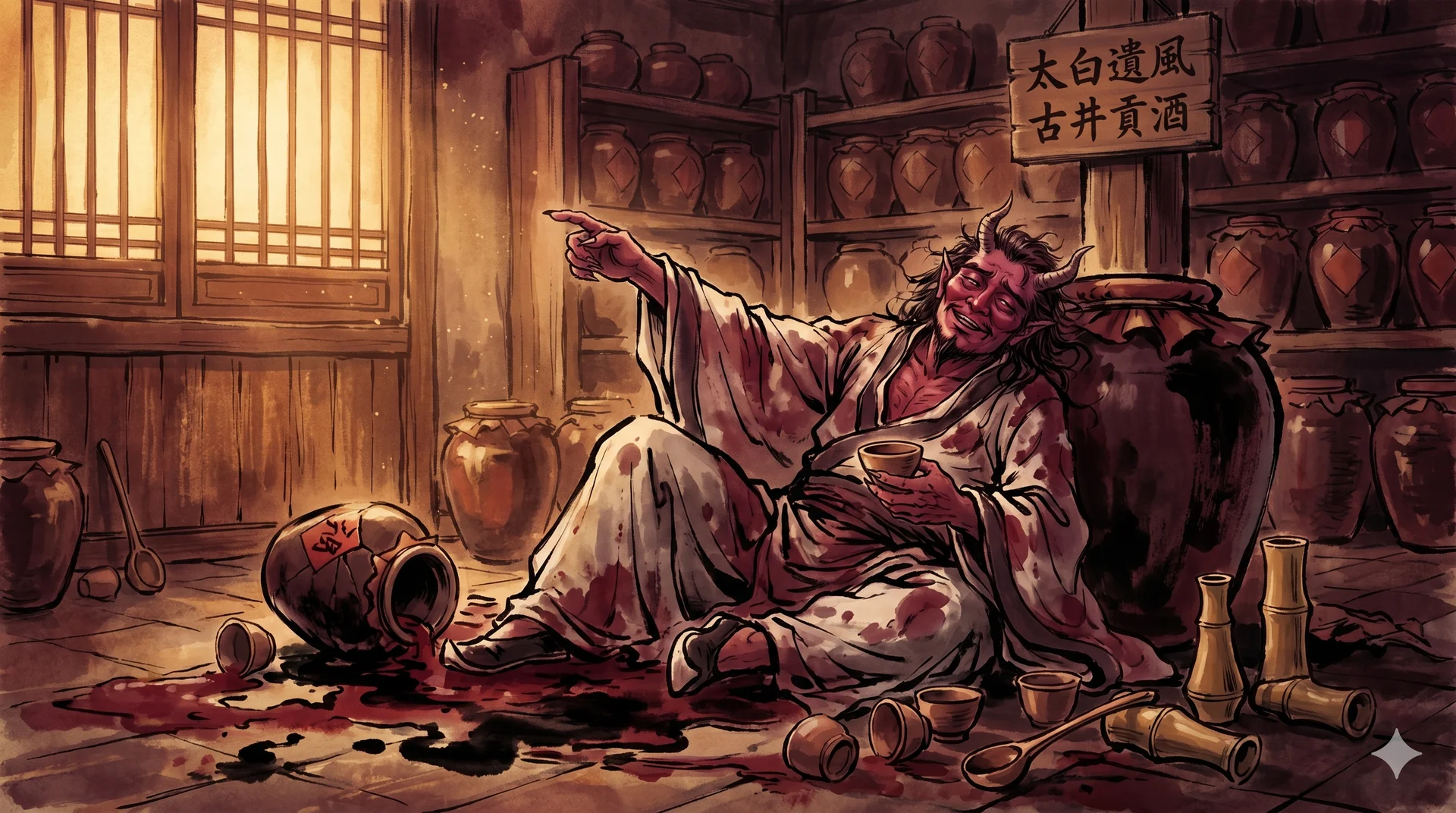
Jiu Gui: The Demon of Drunkenness and Self-Deception in Zhong Kui's Legend
Jiu Gui, the Liquor Demon, appears in Chapter 9 of the Qing dynasty satire 'Zhong Kui Slays Demons' alongside the Lust Demon. Embodied by the phrase 'loving the cup, falsely invoking immortals,' this spirit reveals how addicts dress up self-destruction as transcendence — and why Zhong Kui's sober blade is the only cure.
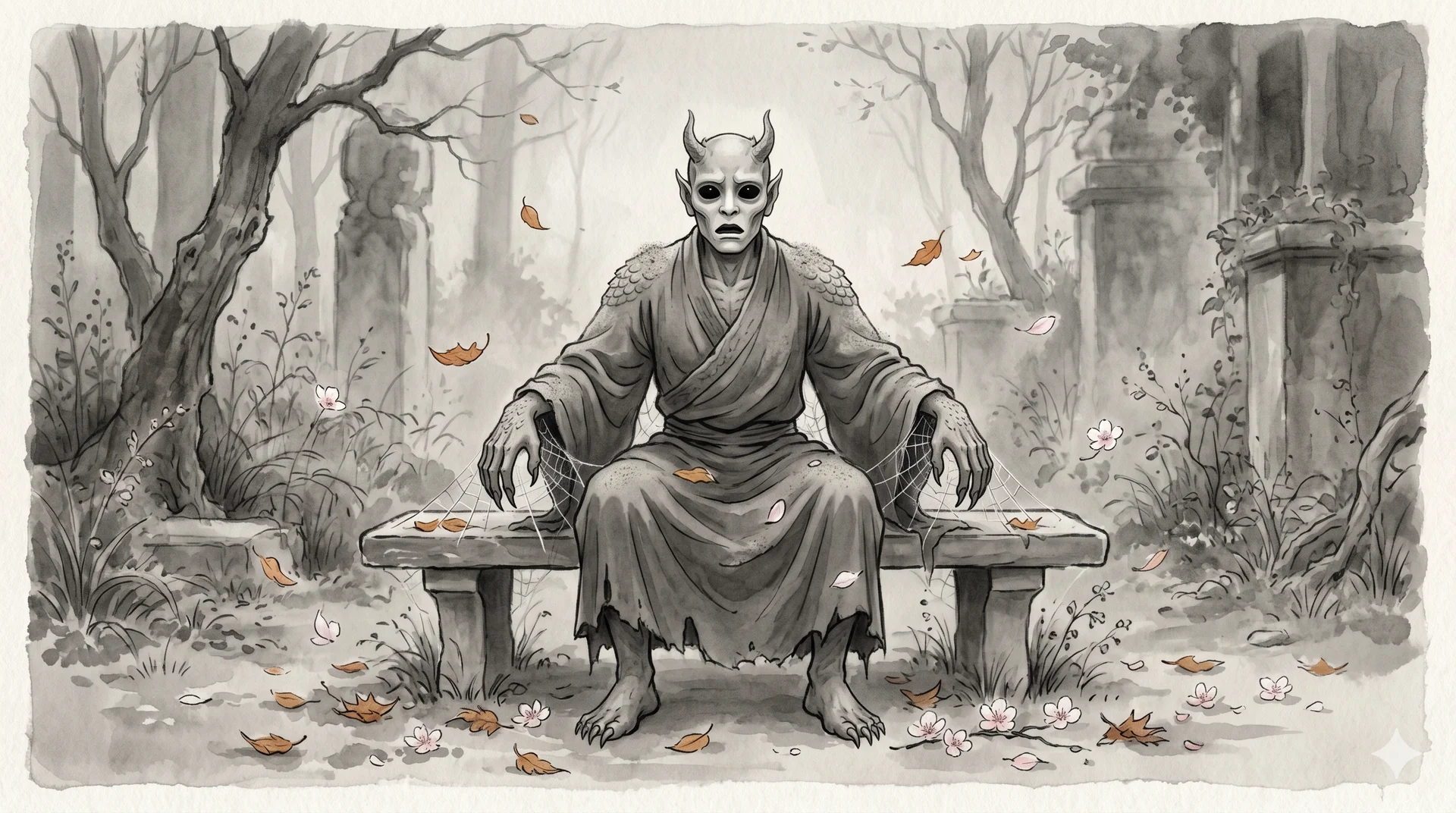
Lengzheng Gui: The Demon of Sloth and Zhong Kui's Final Battle
Lengzheng Gui is the last demon vanquished in the 'Legend of Demon Slaying,' embodying chronic lethargy and aimless inaction. Discover why Liu Zhang placed this unassuming fiend at the climax of his ghost-hunting epic — and what it reveals about the quietest yet most stubborn of all human vices.
🎮 In Black Myth: Zhong Kui, these "ghosts of human nature" are prime candidates for boss encounters and enemy design. Each ghost in the novel has a distinct personality and behavioral pattern — naturally suited for differentiated gameplay mechanics. Imagine: the Rumor Ghost debuffs with lies, the Shameless Ghost is immune to taunt, the Lust Ghost charms your allies, the Drunk Ghost causes AoE chaos... Characters Liu Zhang wrote 300 years ago may become Game Science's most brilliant design inspiration.
Bestiary
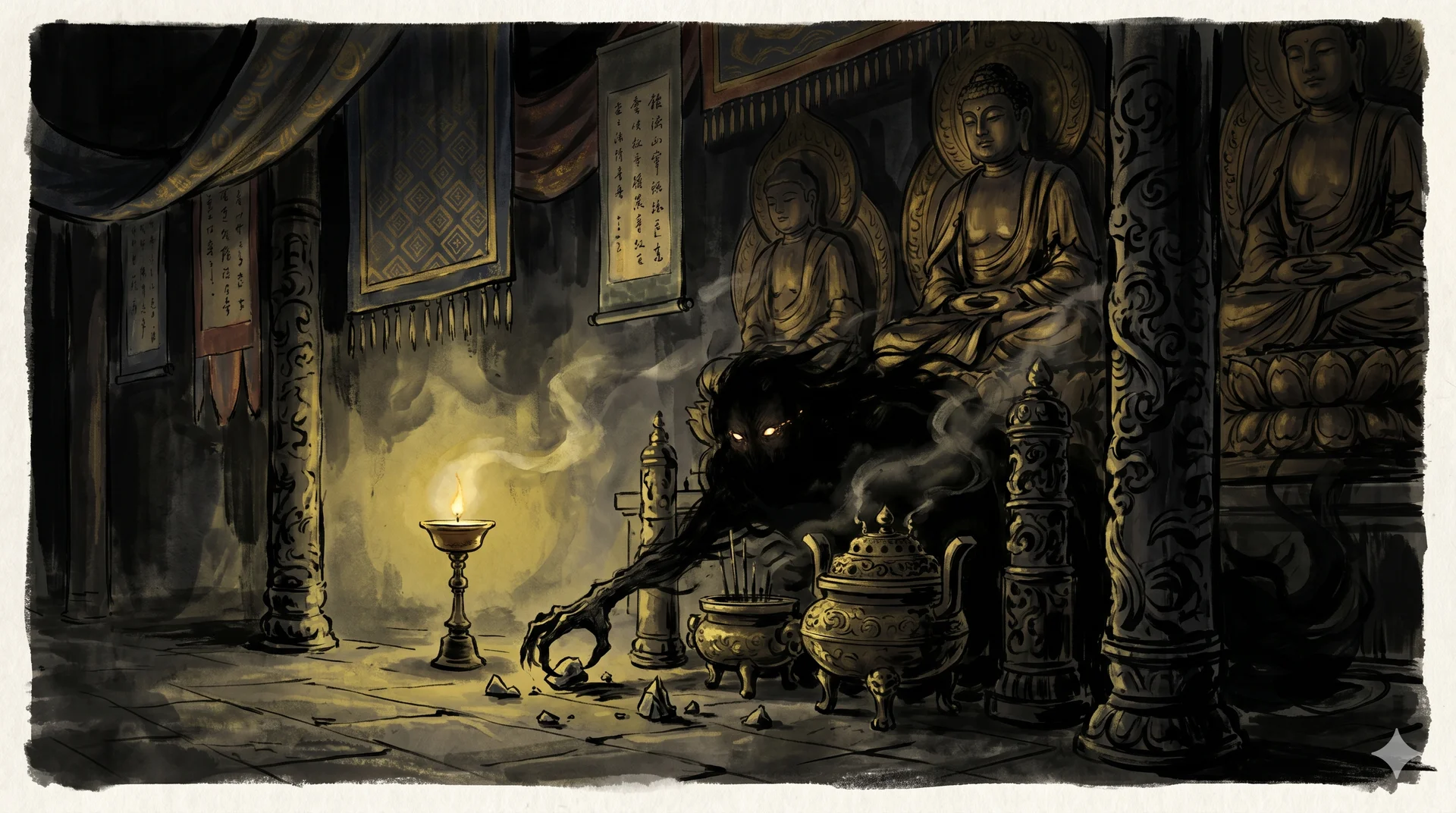
Heiyan Gui: The Sinister Backstabber Ghost of Zhong Kui's Demon-Slaying Legend
Heiyan Gui, the Dark-Eyed Ghost of Chapter 8 in 'Legend of the Demon Slayer,' lurks in Wukong Temple and embodies the treacherous art of covert sabotage. Explore how even the mighty Zhong Kui grows 'too lazy' to strike down this embodiment of insidious jealousy—and what that reveals about confronting petty malice.
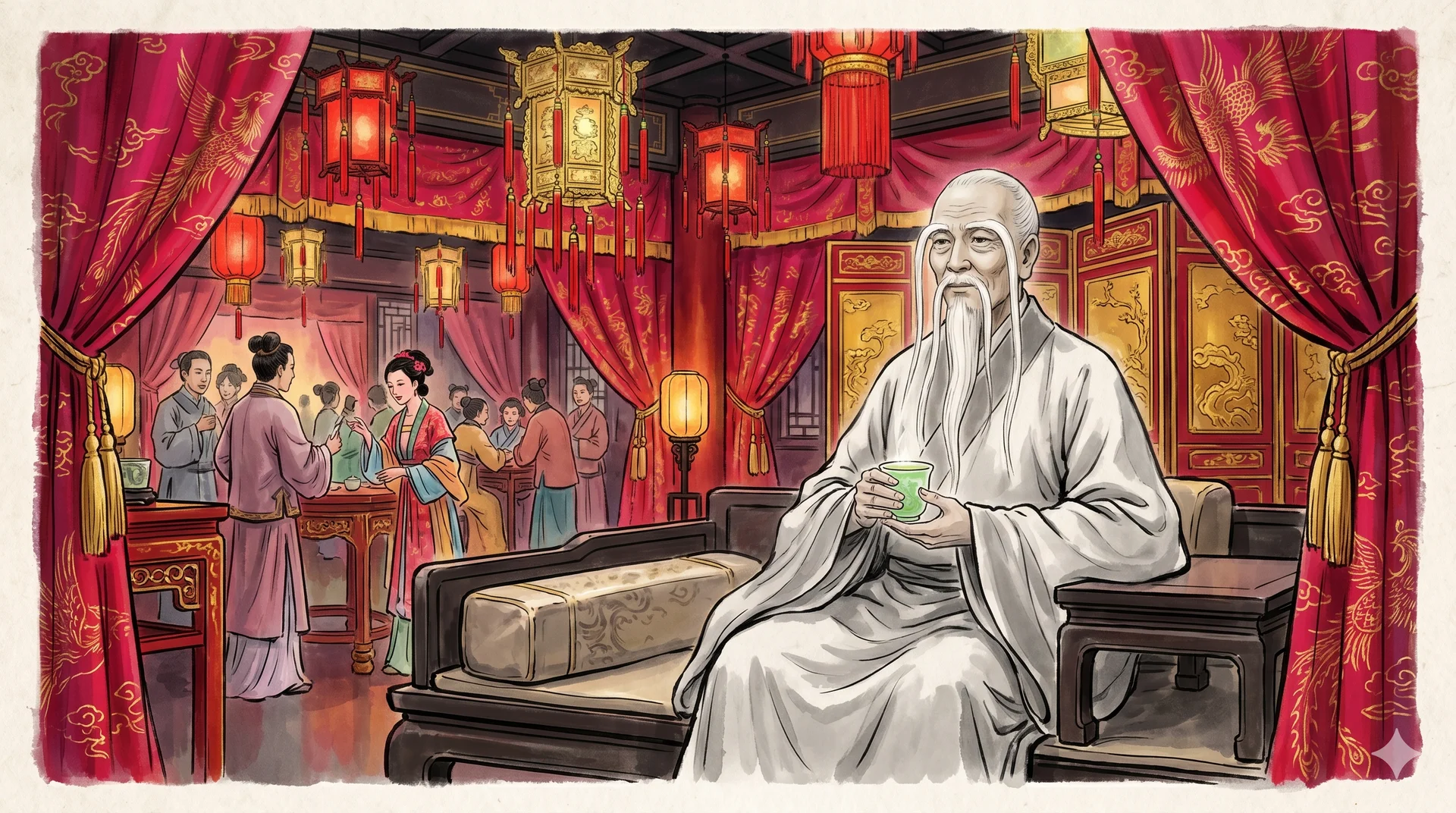
Baimei Shen: The Grey Guardian of the Pleasure Quarters in Zhong Kui's Demon-Slaying Epic
Baimei Shen, the White-Browed Spirit, is one of the most morally complex figures in the classical novel Zhong Kui Zhuan Gui. Dwelling in the pleasure quarters, this enigmatic entity is neither demon to be slain nor deity to be worshipped — forcing Zhong Kui to lay down his sword and rely on wisdom instead of brute force.