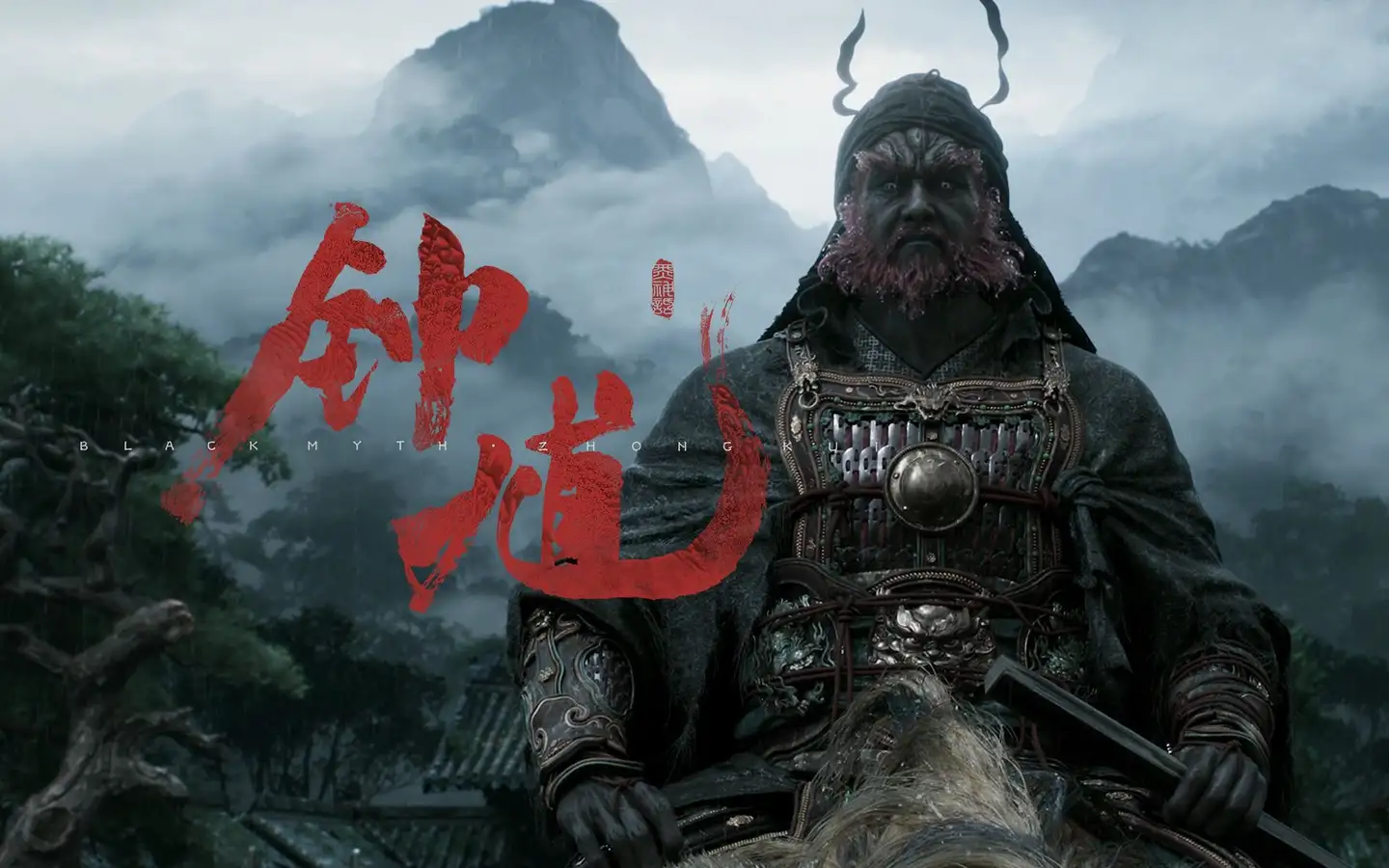
On August 20, 2025, the Gamescom Opening Night Live stage delivered a moment few saw coming. Geoff Keighley unveiled the title card for Black Myth: Zhong Kui (黑神话:钟馗, Hēi Shénhuà: Zhōng Kuí), confirming that Game Science — the studio behind the record-shattering Black Myth: Wukong — had chosen an entirely new protagonist and mythology for its next project, rather than pursuing a downloadable-content expansion. With over 30 million copies sold of its debut title, the studio now turns to one of Chinese folklore's most compelling figures: the Demon Queller of popular religion, a tragic scholar-turned-deity who patrols the boundary between the living and the dead.
What Is Black Myth: Zhong Kui?
Black Myth: Zhong Kui is the second entry in the Black Myth series, currently in development by Shenzhen-based Game Science (游科互动科技有限公司, Yóukē Hùdòng Kējì Yǒuxiàn Gōngsī). Players will step into the role of Zhong Kui, the legendary ghost-catching god whose story winds through the courts of Hell and the mortal realm alike. During the reveal, Keighley described the protagonist as a "ghost-catching god who wanders between Hell and Earth," establishing the dual-world premise at the heart of the game's setting.
The studio has confirmed the following details through its official FAQ:
- Genre: Single-player action role-playing game (ARPG)
- Platforms: PC (Windows), PlayStation 5, Xbox Series X/S
- Business Model: Premium one-time purchase, consistent with the first title
- Engine: Expected to run on Unreal Engine 5 or a later iteration
- Release Date: Unannounced
In a characteristically wry FAQ response, the team noted: "As the name suggests, Black Myth: Zhong Kui shares the same foundation in ancient Chinese mythology and folklore as Black Myth: Wukong. It will remain a standard single-player ARPG with the same business model — except this time you won't be playing a monkey."
The Development Team Behind the Project
Game Science — From Asura to Black Myth
Game Science was founded in June 2014 by seven core developers who had previously worked on Asura (斗战神, Dòuzhànshén), a Tencent-published online action game. Two names stand at the creative helm of the Black Myth series:
- Feng Ji (Yocar) — Co-founder and creative director of the Black Myth franchise. A writer as well as a designer, Feng Ji has cultivated a distinctive approach to narrative that blends classical Chinese literature with modern game storytelling.
- Yang Qi — Co-founder and art director. The sweeping vistas and meticulously crafted character designs that defined Black Myth: Wukong's visual identity are the product of his artistic vision.
Expanded Resources After Wukong's Success
Following the critical and commercial triumph of Black Myth: Wukong, Game Science's capabilities have grown substantially. Tencent acquired a minority stake in the studio in March 2021, providing financial backing, while the title's 30-million-unit sales generated enormous revenue. The result: Black Myth: Zhong Kui benefits from a larger talent pool and a more generous budget than its predecessor ever enjoyed.
Game Science maintains its headquarters in Shenzhen's Nanshan District (TCL Science Park), with its primary development studio located in the Xiangshan Art Commune of Hangzhou's Xihu District — a fittingly picturesque base for a team whose art direction draws so heavily on classical Chinese aesthetics.
The Creative Vision
"To Hunt the Ghosts Without Is Light — But Those Within Burn Deep to Fight"
The game's official tagline — "外鬼易除,内鬼难伏" (Wài guǐ yì chú, nèi guǐ nán fú) — signals an ambitious thematic shift. Where Wukong followed the familiar arc of the Monkey King's rebellion and redemption, Zhong Kui aims inward. The Chinese original draws a deliberate contrast between external demons, which are straightforward to vanquish, and the inner demons of fear, resentment, and moral compromise that resist all easy solutions.
This is far more than a marketing slogan. It connects directly to the mythological Zhong Kui himself — a brilliant scholar of the Tang Dynasty who, according to popular tradition, was denied imperial recognition solely because of his grotesque appearance. In one widely cited version of the legend, he smashed his head against the palace gates in despair and was subsequently appointed by the Jade Emperor as "King of Ghosts," tasked with patrolling the underworld. His story is saturated with themes of injustice, identity, and the tension between outer appearance and inner worth — fertile ground for the kind of character-driven narrative Game Science has pursued since Asura.
From Divine Epic to Supernatural Horror
In a social media post following the reveal, Yang Qi hinted at a significant tonal shift: "Timing matters in creative work. Our team has been immersed in Journey to the West material for over a decade. Perhaps it's the right moment to try something different. Epic tales of gods and demons are thrilling, but the strange and eerie world of zhiguai (志怪, zhìguài) storytelling should offer its own distinctive pleasures."
This is a meaningful pivot. Journey to the West (西游记, Xīyóujì) conjures celestial palaces, dragon kingdoms, and mountain paradises. Zhong Kui's domain, by contrast, belongs to the Ten Courts of Diyu (地府, the Chinese underworld), abandoned temples shrouded in mist, and the haunted margins between life and death — landscapes far closer to the zhiguai tradition of uncanny supernatural tales recorded in collections such as Pu Songling's Strange Tales from a Chinese Studio (聊斋志异, Liáozhāi Zhìyì). Yang Qi's art direction is expected to reflect this darker, more intimate aesthetic.
Genre, Platforms, and Gameplay Direction
While the confirmed genre remains "single-player ARPG" — the same framework as Wukong — the FAQ carefully adds that "as for the specific differences, we are still exploring and experimenting." This strongly suggests meaningful departures in combat mechanics, level design, and character progression, even if the structural skeleton stays recognizable.
On platforms, the official line is that Zhong Kui will launch on "PC and all major consoles." Given that Black Myth: Wukong arrived on PC and PlayStation 5 at launch, with its Xbox Series X/S version following on August 20, 2025, a simultaneous multi-platform release for Zhong Kui seems the most likely scenario. No information has surfaced regarding next-generation hardware or Nintendo platforms.
Development Status: The Honest Truth
One of the most remarkable aspects of the Zhong Kui announcement is Game Science's radical transparency about the project's early state. The FAQ states plainly:
"The project is currently just an empty folder — there is really no gameplay footage to share."
Feng Ji corroborated this on social media, confirming that the game's narrative outline was still incomplete and that no playable build yet existed. For a studio that just delivered one of the most technically impressive games of the generation, this candor is striking — and refreshing.
How Long Will the Wait Be?
Drawing a parallel with Black Myth: Wukong, which required roughly six years from project inception in February 2018 to its August 2024 launch, even an accelerated timeline would place Zhong Kui's release no earlier than 2028. The expanded team and accumulated engine expertise may compress certain phases, but the ambition of building an entirely new world from scratch should not be underestimated.
The wealth of source material available — from the colorful rogue's gallery of demons in The Tale of the Extermination of Demons (斩鬼传, Zhǎnguǐ Zhuàn) to the elaborate bureaucratic hierarchy of the Ten Kings of Hell in Chinese Buddhist cosmology — gives the developers an extraordinary canvas to work with, but turning that raw mythology into a cohesive game world takes time.
In 2025, Black Myth: Zhong Kui received the Ultra Game Awards "Surprise of the Year" accolade — a remarkable achievement for a project whose official description is, literally, an empty folder. That award testifies less to the game itself than to the faith the global community places in Game Science's creative ambition.
What can an empty folder carry? After proving that a Chinese single-player title could move 30 million copies worldwide, Game Science chose the harder path — no DLC, no victory lap, just a blank page and a new myth to build. In a medium saturated with sequels, that decision may be the most exciting reveal of all. The best stories, after all, begin with silence.