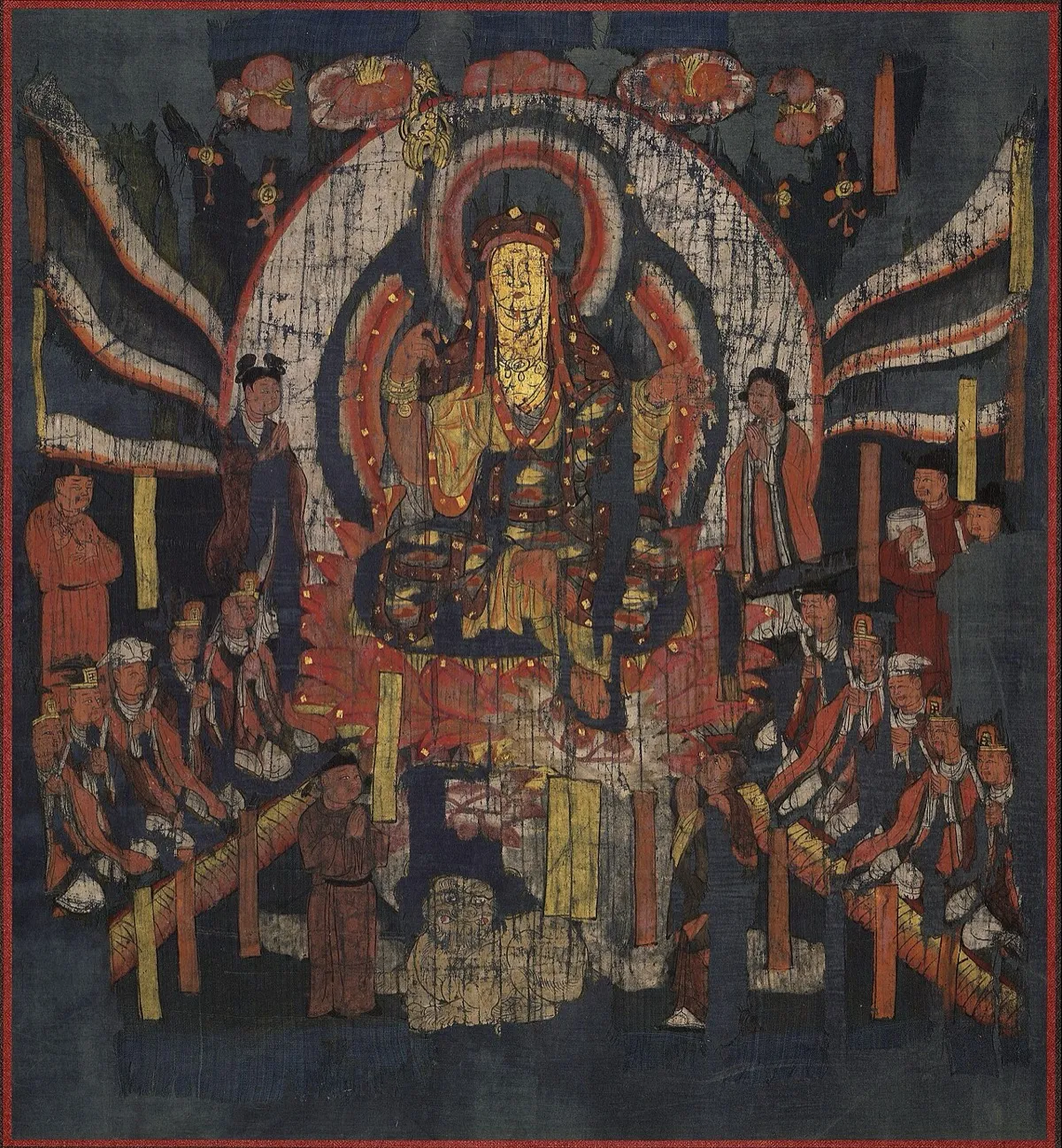
The road to Black Myth: Zhong Kui was anything but spontaneous. It stretches back to the very founding of Game Science in 2014 and winds through a decade of creative ambition, commercial triumph, and a bold pivot that surprised the entire gaming world. This article traces every major milestone along that journey — from the early days of a seven-person startup in Shenzhen to the dramatic unveiling at Gamescom 2025.
The Prequel: Building the Foundation (2014–2024)
June 2014: Game Science Is Founded
Seven core developers from Tencent's ASKER Online (斗战神, Dou Zhan Shen) — led by Feng Ji and Yang Qi — left the tech giant and established Game Science (深圳市游科互动科技有限公司) in Shenzhen. Rather than jumping straight into their dream project, the team cut their teeth on two mobile titles: Hundred Champions (百将行, Bai Jiang Xing) in 2015 and Art of War: Red Tides (战争艺术:赤潮, Zhanzheng Yishu: Chi Chao) in 2017. These projects honed the studio's development pipeline and, crucially, generated the financial runway for something far more ambitious.
During this incubation period, Yang Qi pitched the "Black Myth" concept not once but twice — first in 2016, when the team felt the timing was premature, and again in 2017. The second time, Feng Ji finally gave the green light.
February 2018: Black Myth: Wukong Enters Full Production
Game Science opened a new studio in Hangzhou and formally kicked off development on Black Myth: Wukong. For the next six years, the entire organization poured itself into a single mission: building an action-RPG rooted in the world of Journey to the West (西游记, Xi You Ji). Yang Qi, the studio's art director, immersed himself in the visual language of classical Chinese mythology — from the floral paradise of Flower-Fruit Mountain to the inferno of Flaming Mountain, from celestial palaces to the underworld — forging an aesthetic identity that would become the game's signature.
August 20, 2020: The Trailer That Broke the Internet
A 13-minute gameplay demo for Black Myth: Wukong dropped and immediately went viral. On Bilibili alone it racked up tens of millions of views within days, while Western audiences flooded YouTube and Reddit in disbelief that a Chinese studio could produce something of this caliber. The date — August 20 — would go on to become Game Science's unofficial "announcement day" for years to come.
March 2021: Tencent Takes a Minority Stake
Tencent acquired a minority equity position in Game Science, injecting capital without demanding creative control. The deal gave the studio the financial security to finish Wukong on its own terms while leveraging the resources of one of the world's largest gaming companies.
The Breakthrough: Wukong's Launch (August 2024)
August 20, 2024: A Historic Release Day
Black Myth: Wukong launched on PC and PlayStation 5. Pre-release hype had already reached unprecedented levels in China, but the actual numbers still managed to shock everyone.
Within 72 hours, sales surpassed 10 million copies. Steam concurrent players peaked above 2.2 million — the second-highest figure in the platform's history at that time. Xinhua, China's state news agency, crowned it "China's first AAA game," a label that itself became a cultural talking point.
September 2024: 20 Million Copies and Counting
Just one month after launch, cumulative sales blew past 20 million units — a phenomenal result by any global standard. Accolades followed: nominations and wins at The Game Awards, the Steam Awards, DICE, and BAFTA cemented Wukong's status not merely as a commercial juggernaut but as a genuinely acclaimed title.
The Turning Point: Abandoning the DLC
Late 2024 to Early 2025: The DLC That Almost Was
According to Feng Ji's own account, the team spent "the better part of six months" after Wukong's launch following through on the original plan to develop downloadable content. He confirmed they had "settled on some directions, written some design docs, held some meetings," and that the DLC effort was "properly up and running." In other words, this was no back-of-the-napkin exercise — it had entered active pre-production.
During this period, however, something was shifting beneath the surface. Yang Qi, in particular, had been steeped in Journey to the West lore for well over a decade — stretching all the way back to his work on ASKER Online at Tencent. For an artist of his temperament, the itch for a fresh creative challenge likely grew sharper during the post-launch exhale.
April 2025: A Hotpot Dinner That Changed Everything
In a Weibo post, Yang Qi revealed that the spark for Zhong Kui came during a hotpot dinner in Beijing with a mentor he called "Master Wei." It is a wonderfully vivid detail: the creative genesis of a project that will consume Game Science for years to come began over slices of beef and casual conversation. As Yang Qi himself put it, "In creative work, timing and chance matter enormously."
The Decision: Feng Ji and Yang Qi Find Alignment
Spring 2025: The Pivotal Conversation
Feng Ji later recalled the decisive meeting on social media:
"Yang Qi messaged me that morning and said, 'There's something important I'd like to discuss.' … When I saw him, the first thing I asked was, 'You don't want to do the DLC anymore, do you? You want to start something new.' Relieved, happy, almost inevitable — we were instantly on the same page."
Three details stand out. First, Yang Qi framed his approach cautiously — "something important I'd like to discuss" — signaling that even he felt the weight of pivoting away from months of DLC work. Second, Feng Ji's opening question reveals he had already sensed the shift in Yang Qi's (and perhaps his own) thinking long before that conversation. Third, the phrase "instantly on the same page" suggests this was less a sudden inspiration than a decision both founders had been converging toward for weeks or months.
Once the die was cast, Game Science pivoted from DLC development to a brand-new project. Feng Ji's rationale was characteristically succinct: a new game would let the team "spread their wings, take bold swings, throw out the old playbook, and start from zero."
The Reveal: Gamescom 2025
August 20, 2025: A Day of Triple Significance
August 20 has always carried weight for Game Science, but in 2025 it became truly overloaded with meaning. It marked the one-year anniversary of Wukong's launch. It was also the day Wukong finally arrived on Xbox Series X/S, completing its full multi-platform journey. And — most dramatically — it was the day the world learned what Game Science had been cooking instead of DLC.
During Gamescom Opening Night Live, a CG teaser trailer introduced the Ghost-Catching God who walks between Hell and the mortal realm. Host Geoff Keighley described the protagonist as a "ghost-catching god who wanders between Hell and Earth." An official FAQ went live simultaneously, and the studio's social media accounts quietly rebranded from "Black Myth: Wukong" to simply "Black Myth" — signaling that Wukong was now part of a larger franchise vision.
In the hours that followed, both Feng Ji and Yang Qi published candid posts explaining why they had chosen a new game over DLC. This level of transparency from studio leadership is rare in the industry, and the player community responded with near-universal praise.
Current Status and What Comes Next
As of this writing, Black Myth: Zhong Kui remains in the earliest phases of development. The studio's own description is disarmingly honest: "We've barely set up the project folders, there's nothing to show in-engine yet, and the story outline isn't even finished." The team is currently deep in concept art, world-building, and narrative drafting — the foundational work that precedes full production.
Based on the developers' public comments and standard AAA development timelines, players should expect a wait of at least three to five years before launch. In the meantime, August 20 will continue to serve as the annual window for any new reveals.
From a rented office in Shenzhen in 2014 to the global stage of Gamescom in 2025, Game Science spent eleven years transforming from a scrappy startup into a world-class studio. Now they have chosen to reset everything — to begin again from an empty project folder. When Feng Ji says "start from zero," he makes it sound easy. Everyone knows it is anything but. After 30 million copies sold, the hardest thing is not repeating success — it is having the courage to walk away from it.